.png?width=150&height=48&name=3devo%20-%20Blue%20and%20Dark%20logo%20(1).png "3devo - Blue and Dark logo (1)")
Share this
by 3devo on Nov 27, 2025, 2:23:19 PM
Formnext always brings the AM world together, but this year had a different feeling. The halls were full, the conversations were focused, and the industry seemed more interested in real applications than big showpieces. For us at 3devo, it was a chance to show what we’ve been building, meet the people behind the materials, and have honest conversations about where the market is heading.
Our booth was busy from the moment the doors opened. Many arrived curious about our new PA12 powder-to-filament line, others stopped to explore our ecosystem, and many simply wanted to talk about materials, recycling, and the challenges they face in R&D. It was a week of steady energy, hands-on demos, and valuable insights, and we left with a clearer view of the work that matters most.
The Story of Our Booth
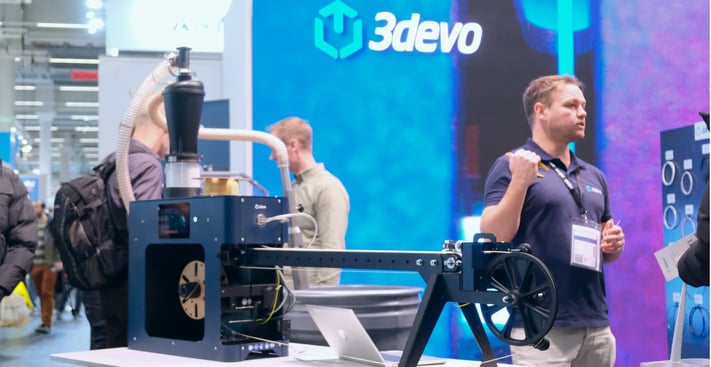
Our booth this year was designed around one idea: keep things clear, simple, and focused on the work that matters. While many stands at the show relied on bright colors and heavy visuals, we chose a calmer space where the technology and materials could speak for themselves. The large video wall set the tone, while the running machines, material samples, and real project showcases did the rest.
A Booth Built Around Real Materials, Not Noise
From the first morning, people gathered naturally around the equipment. Our goal was to make the booth feel open and easy to explore. And it worked. Visitors could walk up to the samples, see the machines running, and follow the material journey without needing a long explanation.
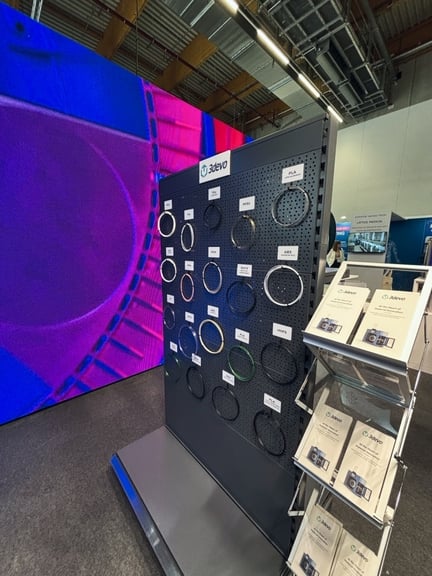
One of the areas that drew people in immediately was the metal rack filled with filament samples. It looked simple at first glance, but it told the story of who we are far better than any banner could. The rack displayed standard polymers, engineering-grade materials, and a range of composite filaments, including glass, carbon fiber, aluminum-filled materials, and other specialty formulations. Some were part of ongoing client projects; others were the result of our own in-house development and testing.
Visitors often stopped here before even looking at the machines. They wanted to touch the filaments, compare materials, and understand how they were made. The variety helped people see the wider picture: 3devo isn’t just a manufacturer of extrusion systems, we support the full journey of material innovation.
That idea came through naturally in conversations. People were curious about how we help teams develop, test, recycle, and validate materials. Many were surprised to learn how hands-on our material specialists are, and how closely we work with users from the first test to successful production. Our solutions, from onboarding and guided development to advanced material testing, fit right into those conversations without needing a sales pitch.
The goal of the booth was to show what we do, simply and honestly. The material rack did exactly that, it turned our ecosystem and expertise into something visitors could see, compare, and understand in seconds.
The PA12 Powder-To-Filament Line: The Biggest Attraction
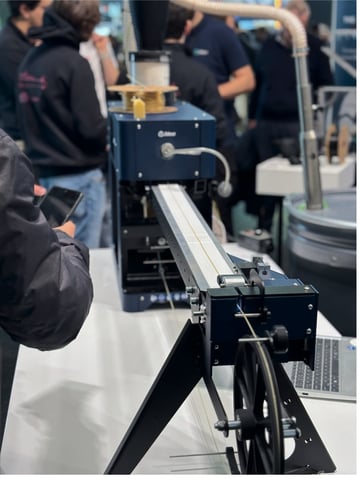
The most visited area of the booth was our new PA12 powder-to-filament setup. It was the first time we showed this prototype publicly, and the interest was constant throughout the week.
The live demo showed how MJF powder can be reprocessed into new filament, using a full setup that included:
- PA12 feedstock
- A continuous extrusion run
- The new extended air-cooling path and conveyor system designed for increased throughput and material recovery.
People often stopped, pointed, and asked questions before we even introduced the system. The large industrial barrel filled with HP MJF powder and the transparent cooling section helped visitors instantly understand the idea: turning powder waste back into something usable. Many stayed longer just to watch the filament form and spool in real time.
Hands-On, Human Conversations
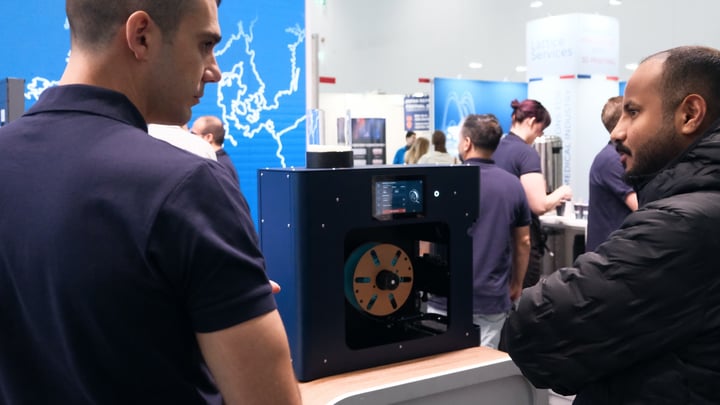
What stood out most was how many conversations started simply because something was running. The Filament Maker TWO, the live interactive sensor setup, and the material samples encouraged people to ask practical questions like “What about reinforced polymers?”, “How do you keep consistency across runs?”, “How fine can the powder be?”
The booth didn’t need theatrics. The combination of live extrusion, clear messaging, and real samples made the space feel approachable and grounded.
Recycling Corner: A Clear Story In One Glance
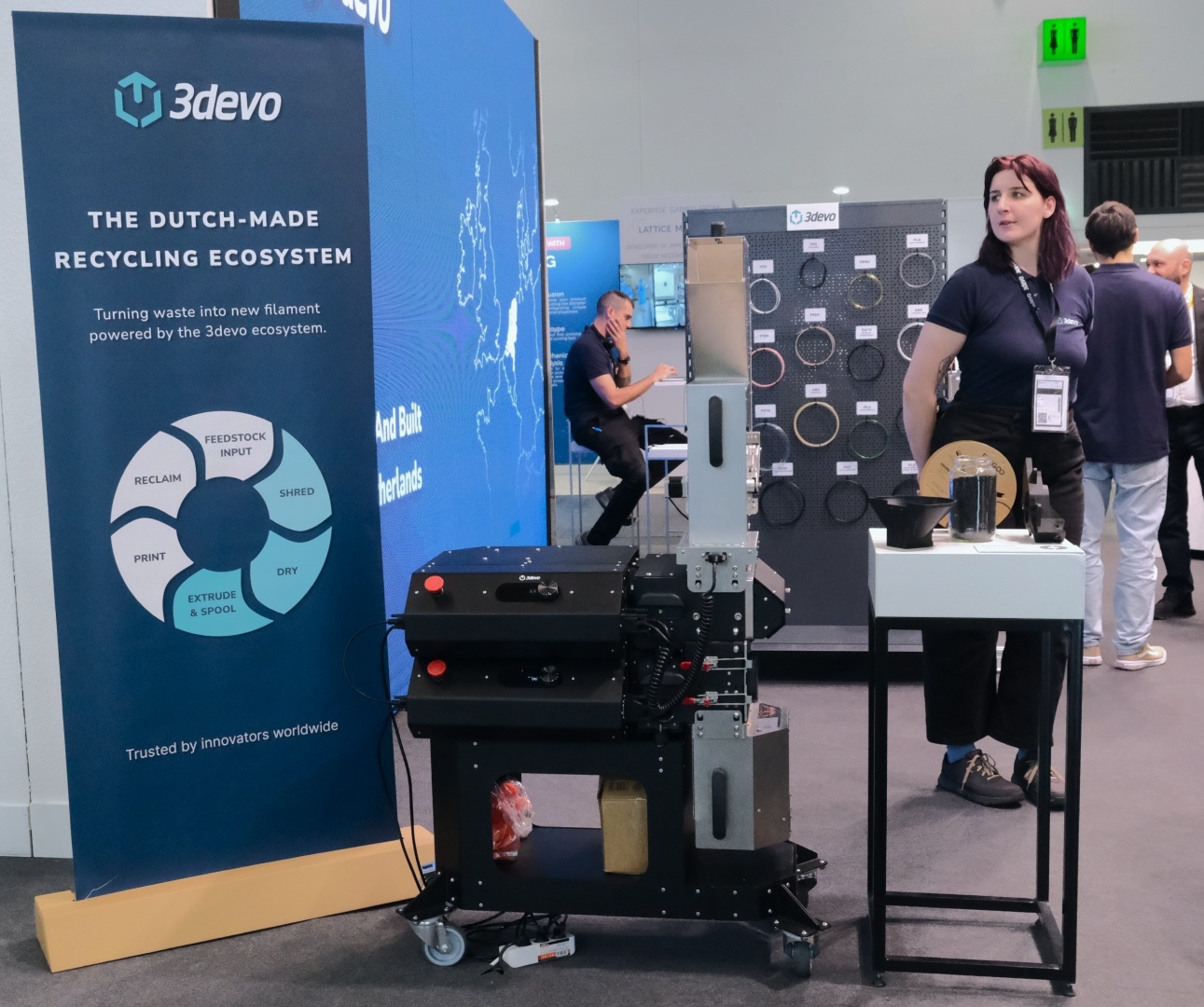
Our recycling corner with the GP20 Plastic Shredder, the banner explaining the ecosystem, and the University of Surrey samples, helped people follow the circular loop visually. Many visitors took time to examine the shredded parts, the regrind, the fresh filament, and the new printed pieces. It turned the idea of “closed-loop recycling” into something you could literally hold.
Collaboration Spotlights: Real Projects, Real Materials
University of Surrey - Closing the Loop in 3D Printing
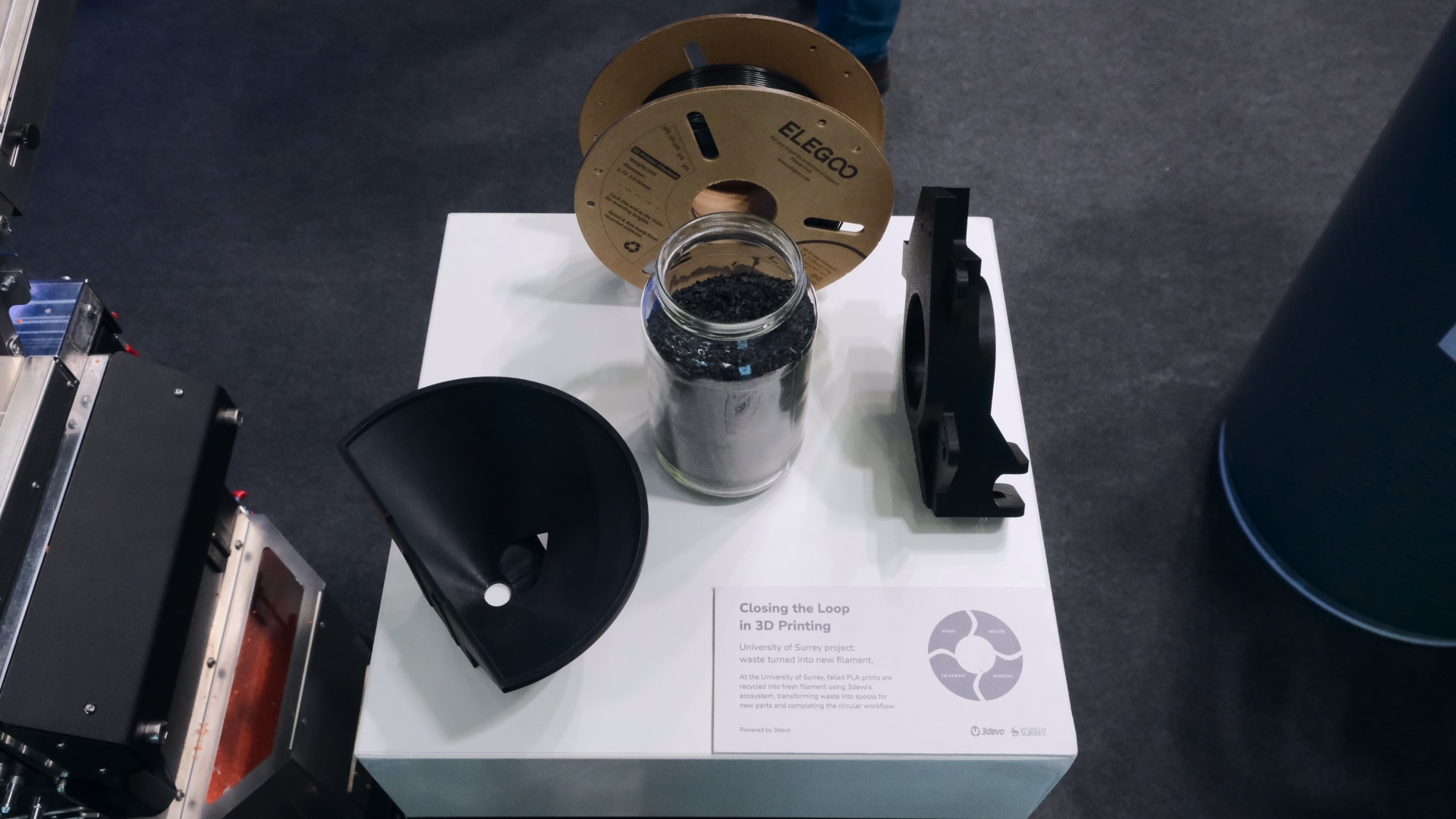
One of the most visited parts of the booth was the University of Surrey stand. It looked simple with four items in a row, but it told a complete circularity story in one glance. Starting with the original PLA part (a printed component that became redundant after a design change), visitors could follow the full journey: the scrapped piece, the shredded material, the new recycled filament, and finally the functional prototype printed from that filament.
What made this collaboration stand out was its honesty. This was more than a theoretical demonstration; it was a real workflow happening inside the university’s engineering lab. People were often surprised by how “everyday” the waste part looked; it reminded many visitors of the scraps piling up in their own labs. The recycled filament was used to make a functional prototype for the Formula Student race car team, proving that circularity can support real engineering work, not just classroom exercises.
Visitors often paused here longer than expected. Many talked about waste management in their own labs, or how difficult it is to teach sustainability in a hands-on way. Some even shared that seeing the four-step loop laid out so clearly “made circularity finally feel realistic.” The University of Surrey project made that conversation easy. It showed that with the right tools, closing the loop on plastic waste can be both practical and educational.
Avient - From Advanced Polymers to Functional Validation
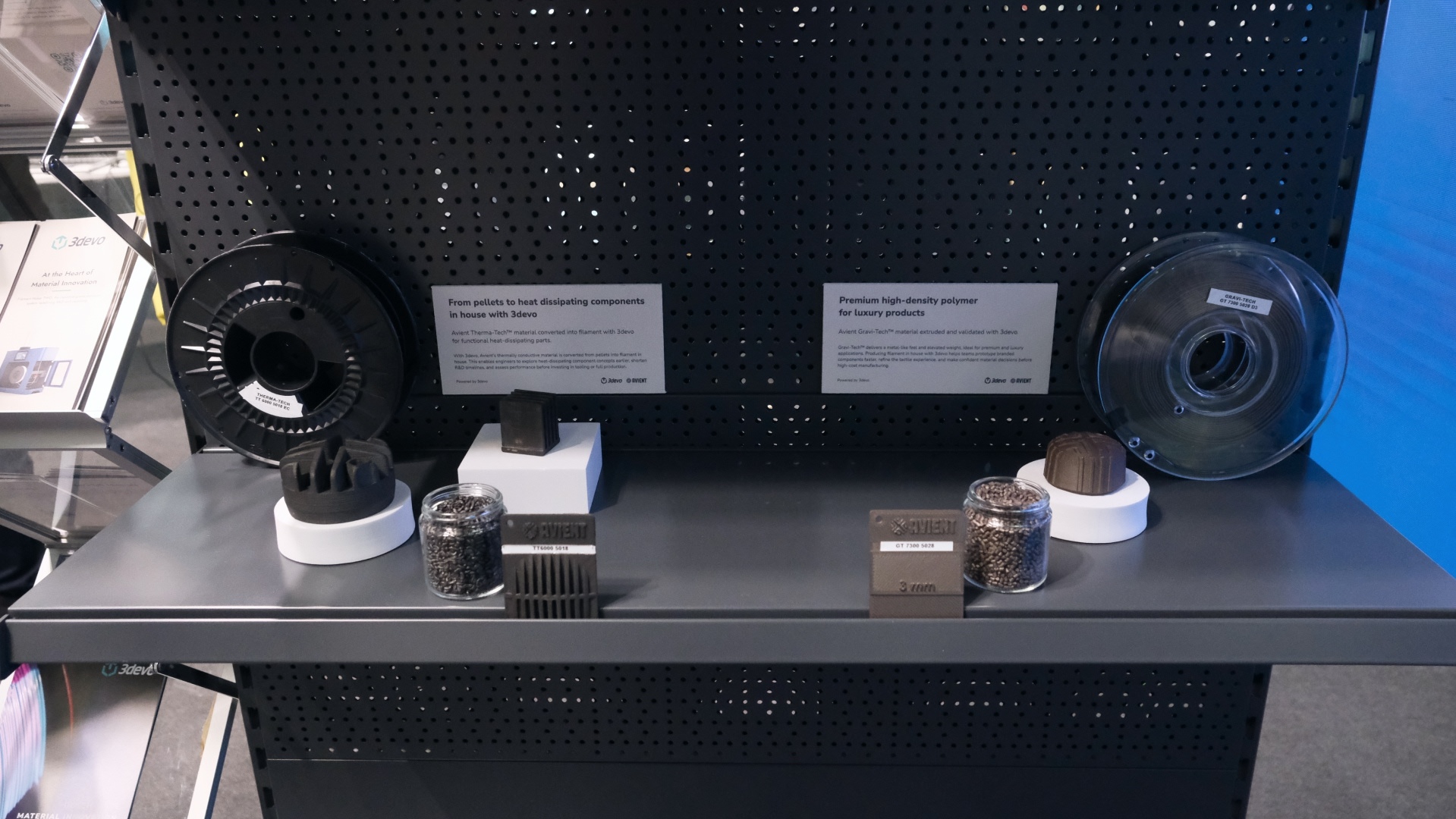
A few steps away, the metal rack featured a shelf dedicated to Avient, each with a full material-to-part story. On one shelf, visitors found Avient’s Therma-Tech™ pellets, the filament created on a 3devo system, and the heat-dissipating component printed from that filament. On the other, the same pattern: Gravi-Tech™ pellets, the extruded filament, and a printed piece showing the material’s distinct weight and feel.
These two materials represent very different challenges, thermal management and premium product design, but both, use the same principle: converting pellets into filament in-house to speed up development. Visitors could immediately understand the value: instead of waiting for external suppliers or costly tooling, R&D teams can test concepts earlier, explore performance faster, and make confident decisions sooner.
Many visitors picked up the printed Avient parts, especially the Gravi-Tech™ cap, not just to inspect them, but out of simple curiosity. They were surprised by the weight, the metallic feel, and the fact that something that ‘felt like metal’ was 3D printed. That small, instinctive reaction often sparked deeper conversations about what in-house material development makes possible.
The Avient shelf helped anchor the message we’ve been building across our brand: we support the full process, not just the machine step. Seeing a global materials leader use the 3devo ecosystem for real R&D made that message unmistakable.
External Environment & Trends
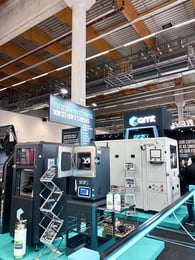
Formnext this year had a noticeably different feel. Instead of big, attention-grabbing reveals, the show carried a more mature tone, with many exhibitors focusing on practical value, reliability, and end-to-end workflows. It felt less about “what’s new” and more about “what actually works.”
Across multiple halls, several themes appeared consistently:
- Productivity, sustainability, automation, and integrated workflows came up again and again, strong signs that the market is shifting toward real-world applications rather than experimental concepts.
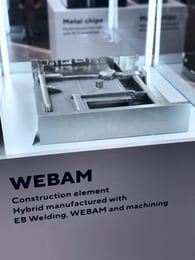
- Companies like Pro Beam showcased hybrid setups that combine additive manufacturing with traditional processes, showing how AM is increasingly becoming part of a larger production chain rather than a stand-alone step.
- HP and a few others took a different approach, focusing less on hardware and more on final applications and outcomes, highlighting the value of AM without spotlighting the machines themselves.
- Several stands featured robotic arms working alongside AM systems, including large-format setups, a clear signal that automation and robotics are becoming more standard in production workflows.
- AI and digitalization tools were also highly visible.
- Ailoys GmbH presented a plug-and-play device that detects print defects in real time and automatically adjusts settings.
- Other exhibitors highlighted software that improves traceability, reduces manual steps, and makes production more repeatable.
- The presence of post-processing and finishing companies such as AM Technologies reinforced the idea that the industry is expanding around the full AM value chain, not just the printing step.
- Automation extended beyond printers too, for example, Feelo demonstrated automatic filament winding, showing that even peripheral steps are becoming more streamlined.
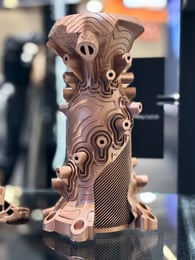
Overall, the show made it clear that the additive manufacturing landscape is evolving: fewer showpieces, more complete workflows, and a stronger focus on turning materials and ideas into real, repeatable results.
Why These Trends Matter for Material Innovation
Seeing these trends across the show made one thing clear: the industry is moving toward solutions that are practical, integrated, and ready for real use. Hardware is becoming more reliable and standardized, and the focus is shifting toward the ecosystem around it, including materials, workflows, automation, and application-level results.
For us, this direction aligns closely with the work we’re doing. More teams want to develop, test, recycle, and validate materials in-house. They want faster cycles, clearer data, and the ability to experiment without depending on external suppliers. Conversations at the booth reflected this repeatedly, with visitors looking for ways to understand their materials better, solve challenges earlier, and work more efficiently.
The interest in automation, circularity, and full workflows also mirrors what we see inside R&D labs and production teams around the world. As additive manufacturing grows up, materials and processes become just as important as hardware performance. That shift makes the combination of extrusion systems, recycling tools, and hands-on support more relevant than ever.
Formnext showed that the industry isn’t just expanding, it’s maturing. And this maturity opens space for deeper material innovation, stronger collaboration, and more practical, hands-on solutions that help teams turn ideas into real, functional results.
Thank You & What’s Next
Thank you to everyone who stopped by, shared ideas, asked questions, or simply took a moment to watch the machines run. Formnext is always a reminder that this industry moves forward through real conversations and the curiosity of the people behind it.
We left the show with new insights, new connections, and a clearer understanding of what teams need from their materials and workflows. We’re looking forward to continuing these discussions and supporting more projects in the months ahead.
If you’d like to learn more about our ecosystem, explore materials, or talk through a project idea, feel free to reach out, we’re always happy to talk.
🎥 A Short Post-Show Reflection
Here’s a brief video message from our CCO, Timo van der Laak, sharing what stood out at Formnext 2025 and how the week shaped our perspective on material innovation and workflows.