.png?width=150&height=48&name=3devo%20-%20Blue%20and%20Dark%20logo%20(1).png "3devo - Blue and Dark logo (1)")
Share this
by 3devo on Jun 17, 2026, 1:00:51 PM
Demand often exposes what matters most.
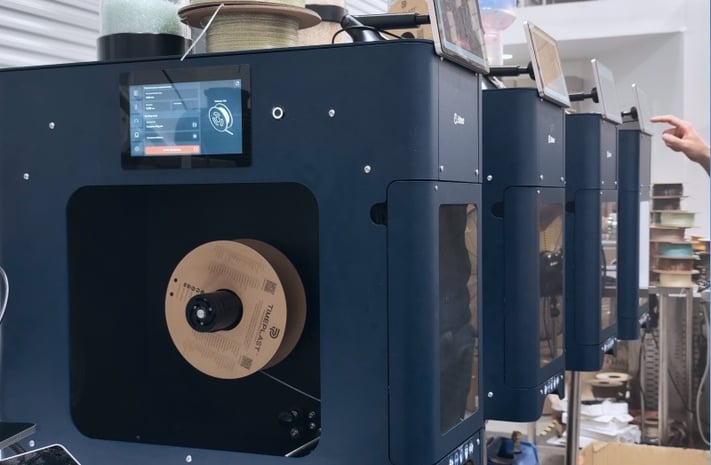
For Timeplast, growing demand for biodegradable and water-soluble filament has pushed their production setup beyond experimentation and into a more production-led environment. Today, the company operates multiple Filament Maker TWO systems as part of that effort, while exploring how to scale further.
This pilot has not been about perfect conditions. It has been about learning under real pressure.
Reliability over headline specs
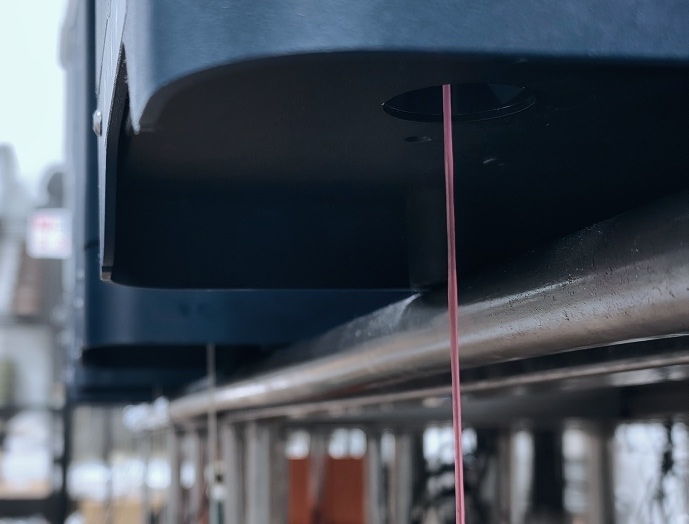
Extrusion in the pilot setup, where filament is collected for downstream spooling.
One thing that stood out during the pilot was simple: reliability matters.
When running difficult materials over longer periods, stable extrusion and consistent quality become critical. In the Timeplast setup, long-run consistency was seen as more important than headline output or features.
As the team noted during the pilot, the ability to maintain quality over extended runs, even overnight, became a key reason the setup showed potential.
Challenging materials surface real process issues
Timeplast’s materials behave differently from standard polymers, including vapor during processing that affected filament sensing. Rather than treating that as a failure point, the collaboration led to a sensor adaptation aimed at addressing the issue. Combined with broader process observations, this became part of the learning.
That is part of what a pilot is for, surfacing what needs improving.
From outsourcing to in-house control
Another important lesson has been the value of control.
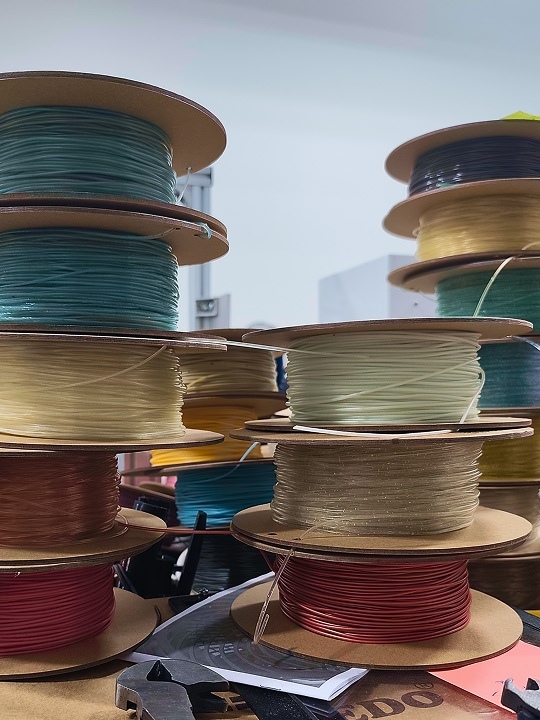
Before bringing filament production in-house, Timeplast had explored external manufacturing routes but struggled to stabilize production. The pilot has reinforced the potential role of a controlled in-house workflow when material behavior is difficult and repeatability matters.
A partnership built through iteration
Beyond hardware, the pilot has also been shaped through iteration between teams, including process feedback, engineering input and on-site visits.
That matters because moving toward scalable workflows rarely depends on equipment alone. It depends on learning in real environments.
Looking ahead
The collaboration with Timeplast continues, but one thing is already clear: reliable and repeatable process control matters when scaling.
That is exactly what pilots like this help validate.