/3devo%20Logo%20Borderless%20-%20Dark%20Mode.png?width=200&height=64&name=3devo%20Logo%20Borderless%20-%20Dark%20Mode.png "3devo Logo Borderless - Dark Mode")
.png?width=150&height=48&name=3devo%20-%20Blue%20and%20Dark%20logo%20(1).png "3devo - Blue and Dark logo (1)")

Developing Bio-Based Filaments from Agricultural Waste
Context
Crea3D, an Italian additive manufacturing solutions provider, explores new material innovations for 3D printing. One of their research initiatives focused on developing bio-based composite filaments by incorporating agricultural waste into polymer materials.
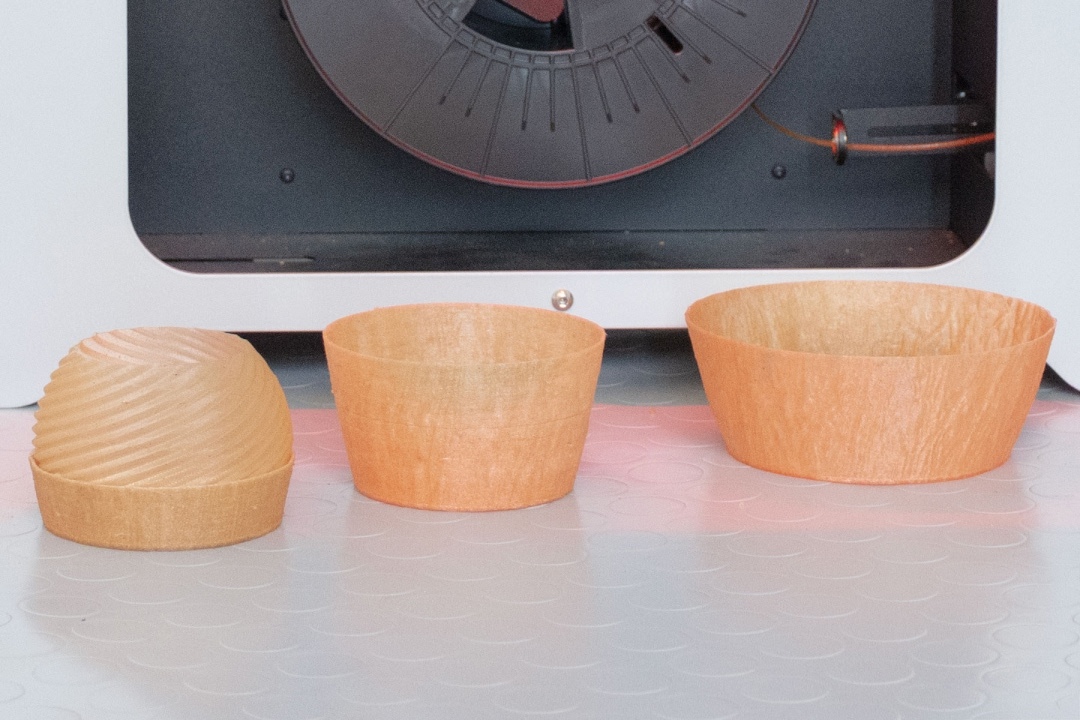
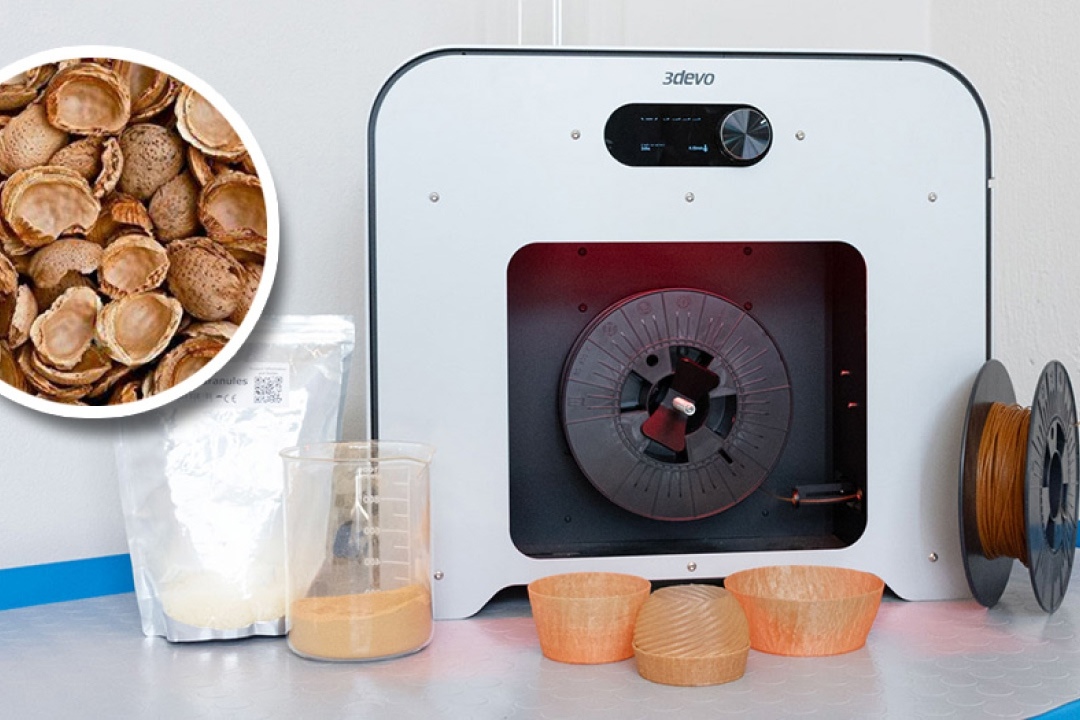
Almond shells, a by-product of the food industry, are typically discarded or used in low-value applications. The Crea3D team investigated whether this organic waste could be transformed into a usable additive manufacturing material.
The Challenge
Agricultural waste materials such as almond shells present an interesting opportunity for sustainable material development. However, incorporating organic fillers into polymer filaments introduces several technical challenges.
Natural fibers and powders can affect extrusion stability, filament consistency, and printability. To successfully develop a composite filament, the material must remain processable during extrusion while maintaining sufficient strength and dimensional stability for 3D printing.
The challenge was to transform almond shell powder into a printable composite material without compromising the reliability required for additive manufacturing.
The Approach
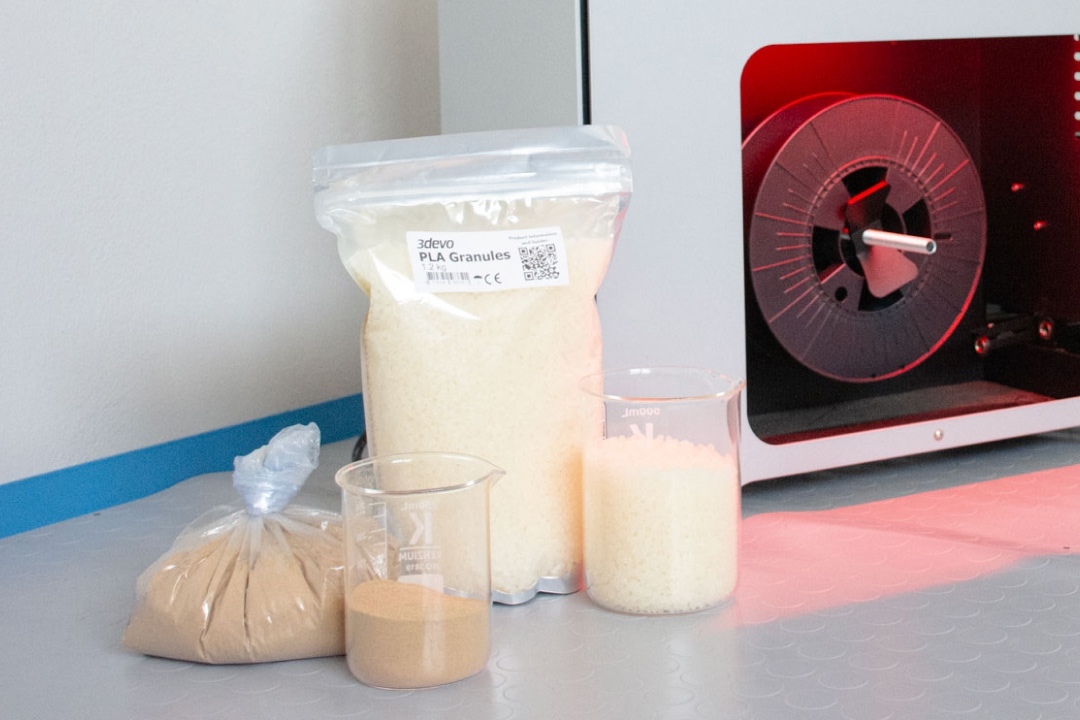
To explore the feasibility of bio-based filaments, the Crea3D team developed a workflow that combines PLA with finely processed almond shell powder.
By blending the organic filler with PLA and converting the mixture into filament, the team could evaluate how the composite material behaves during extrusion and 3D printing.
This approach enabled researchers to experiment with new bio-based materials while assessing their performance in real additive manufacturing applications.