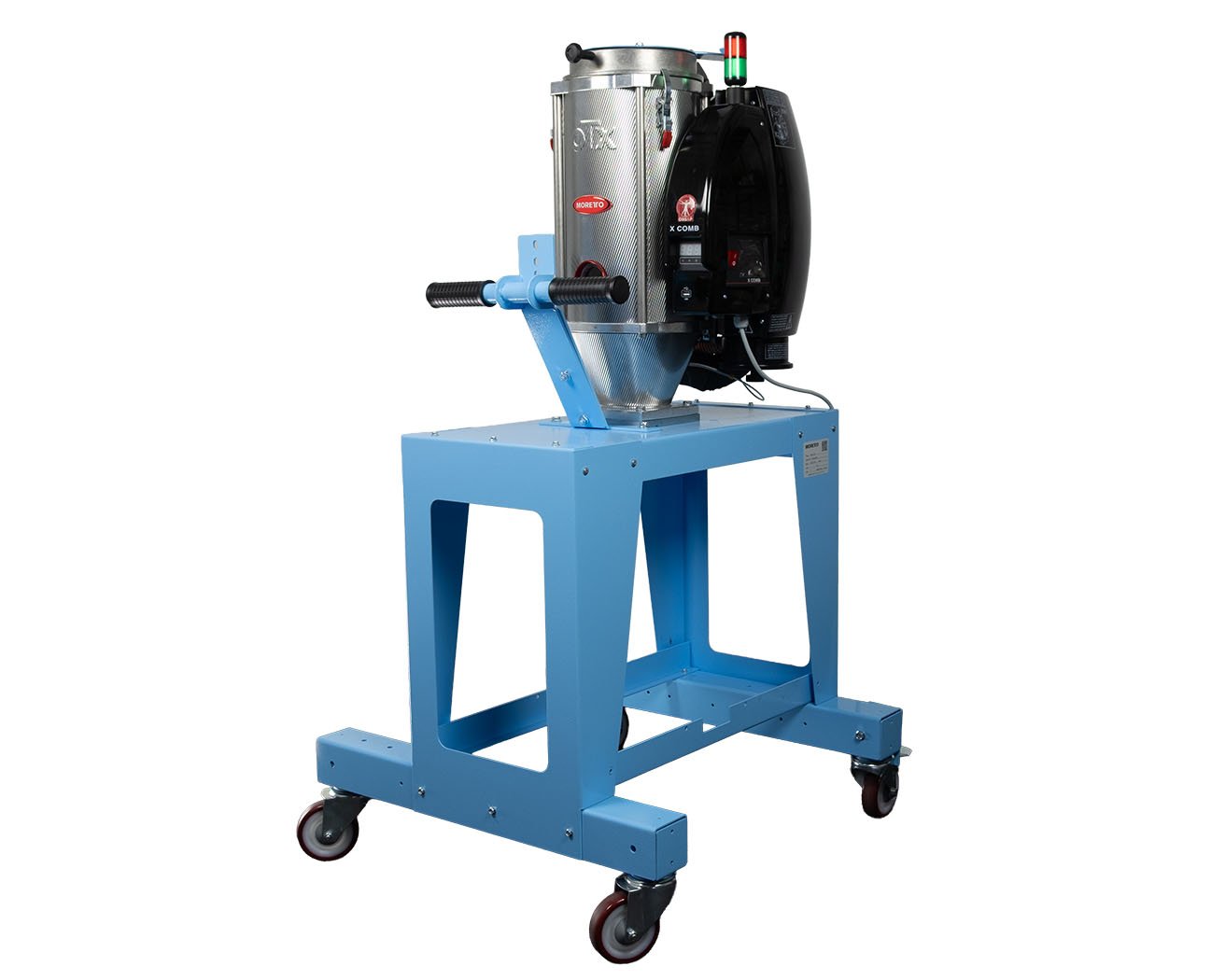
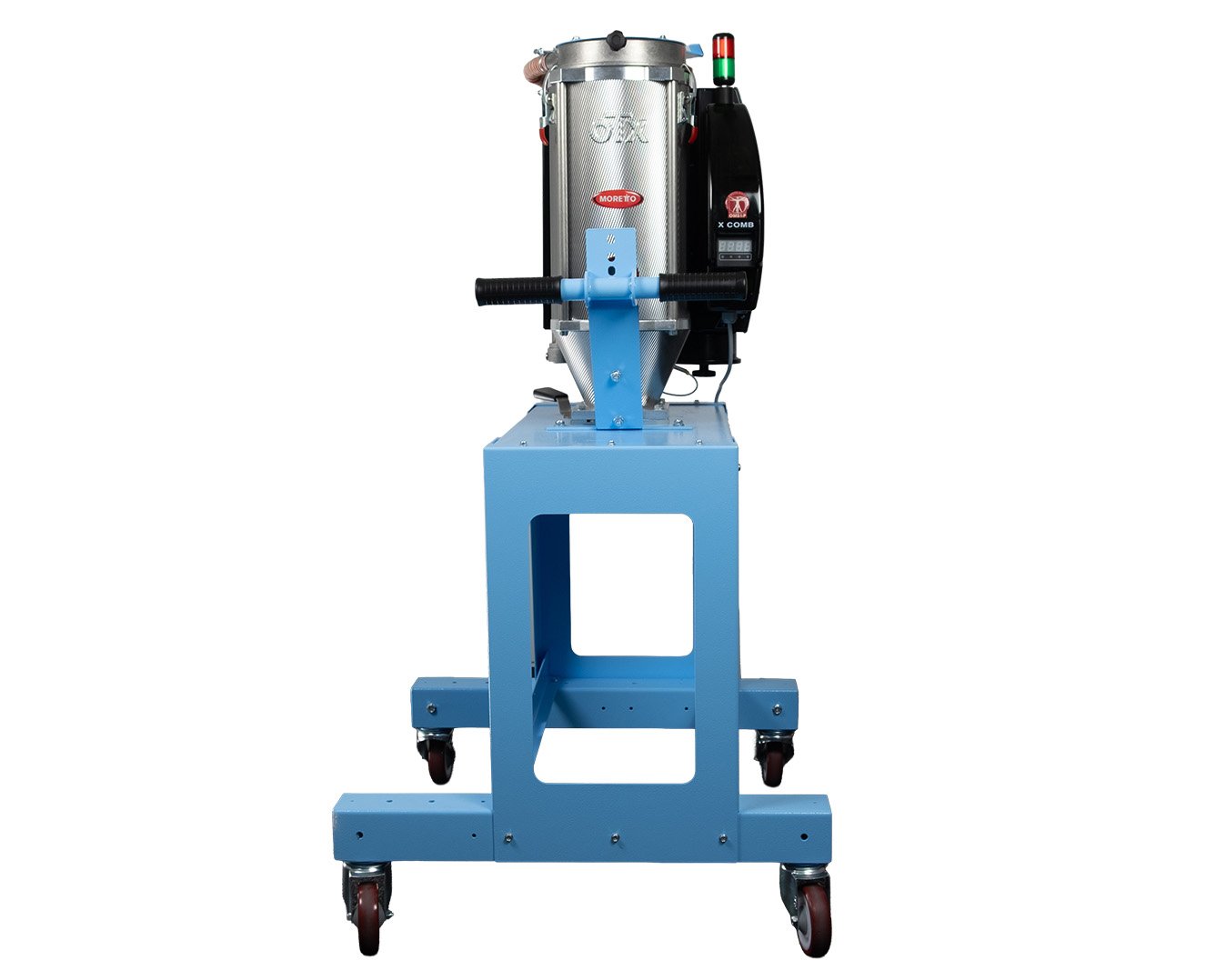
XD12 Desiccant Dryer 

For hygroscopic materials, drying is a required step before extrusion.

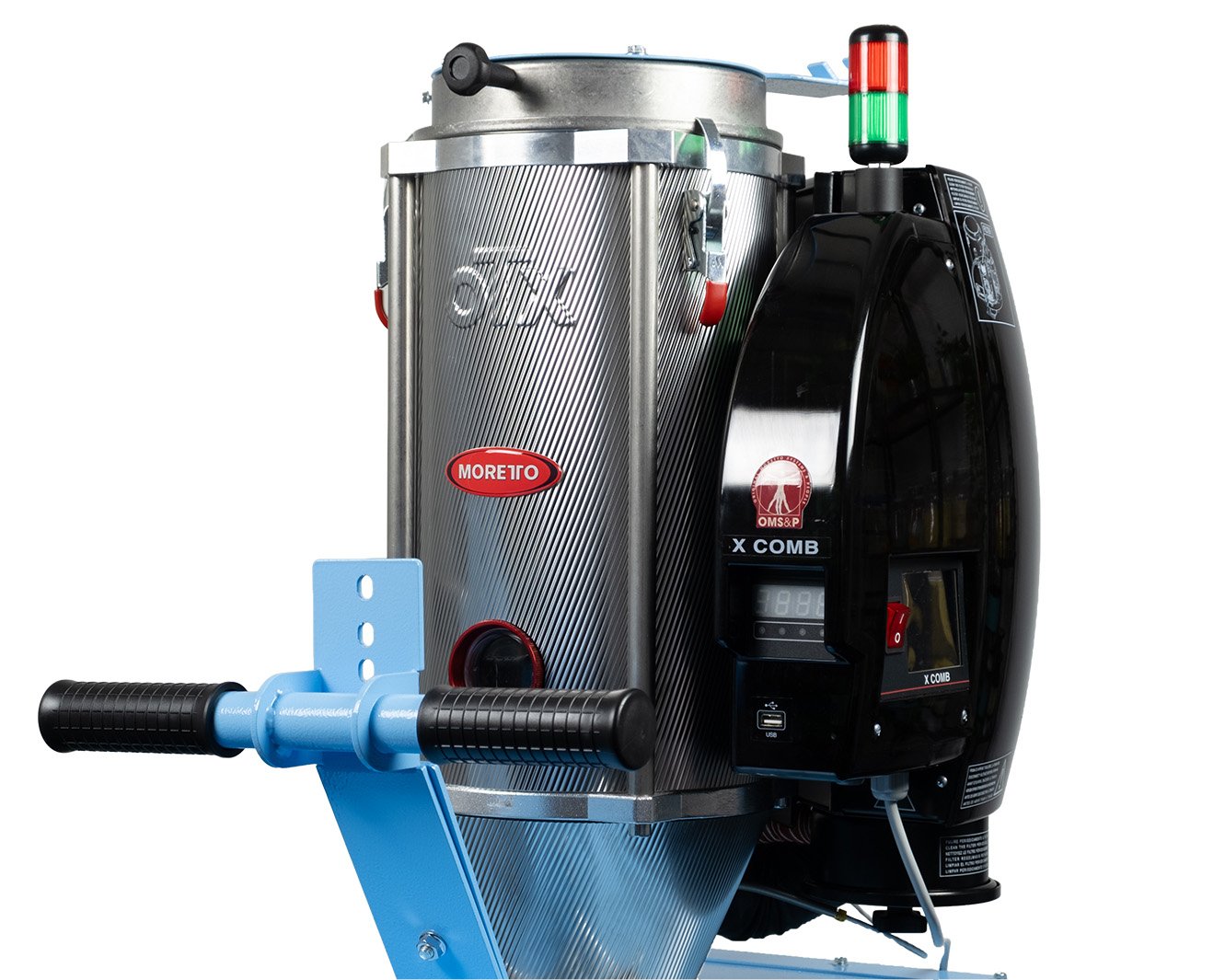
Many engineering polymers (PA, PC, PET, TPU and dozens more) will not extrude cleanly until they are dried. The XD12 is Moretto's compact, all-electric honeycomb dryer.

Material comes off GP20 Plastic Shredder, or straight out of the bag, dries in the XD12, then goes into Filament Maker TWO or Filament Maker X10 ready to run. 

Replaces the DW14. The XD12 is the direct successor to Vismec DW14 and is what 3devo now supplies. DW14 is no longer sold. Existing DW14 owners keep full support through the Support Platform.
Trusted by Industrial and Research Teams Worldwide

−45 °C

Dew point

60-180 °C

Drying temperature range

2.4 kg/h

Maximum drying capacity

12 L / 7.2 kg

Hopper and material capacity

1.7 kW

Electrical power

34 kg

Unit weight

2-8 m³/h

Adjustable airflow

No compressed air

All-electric turbocompressors

At 2.4 kg/h maximum drying capacity, one XD12 covers Filament Maker X10's rated throughput of up to 1.5 kg/h with headroom.

Role in the Material Workflow

Moisture control is part of a broader material workflow, supporting reliable processing from preparation to extrusion.

3devo Full Solution Infographic

Drying helps materials enter extrusion under stable conditions, reducing variability and supporting repeatable outcomes. 

How it works

Stable dew point and even material treatment:

  • 100% Zeolite Wheel
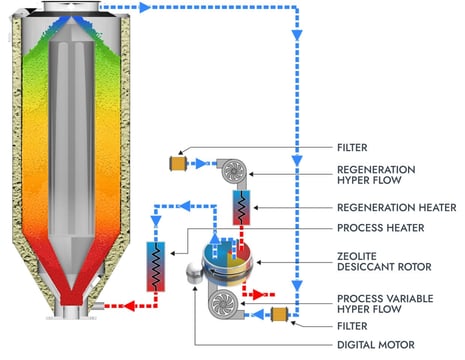
    Zeolite molecular sieves absorb more than the silica gel used in conventional dryers, and the continuously rotating honeycomb rotor holds the dew point steady instead of cycling it. Rated to −45 °C.
  • No Compressed Air
    Built-in turbocompressors supply all process air electrically. Nothing to plumb in, no compressor to buy, no air line to maintain.
  • Antistress Control
    The XD12 monitors return-air temperature and modulates airflow to protect heat-sensitive polymers from over-drying. Material sitting in the hopper between runs is not degraded.
Airflow circuit of the XD12 desiccant dryer, showing the zeolite desiccant rotor, process and regeneration heaters, Hyper Flow turbocompressors, filters, and the insulated OTX hopper with its central air-distribution duct.
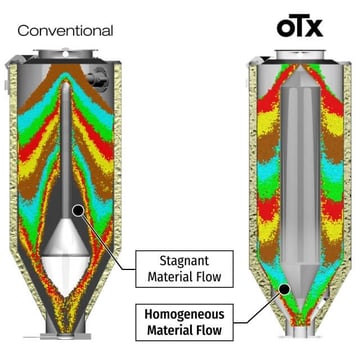
Cutaway comparison of a conventional drying hopper and the OTX hopper, showing stagnant material flow at the walls versus homogeneous downward flow.

Hopper geometry

In a conventional hopper, material at the walls stagnates while the center drains. Two granules loaded at the same time leave the hopper with different thermal histories.

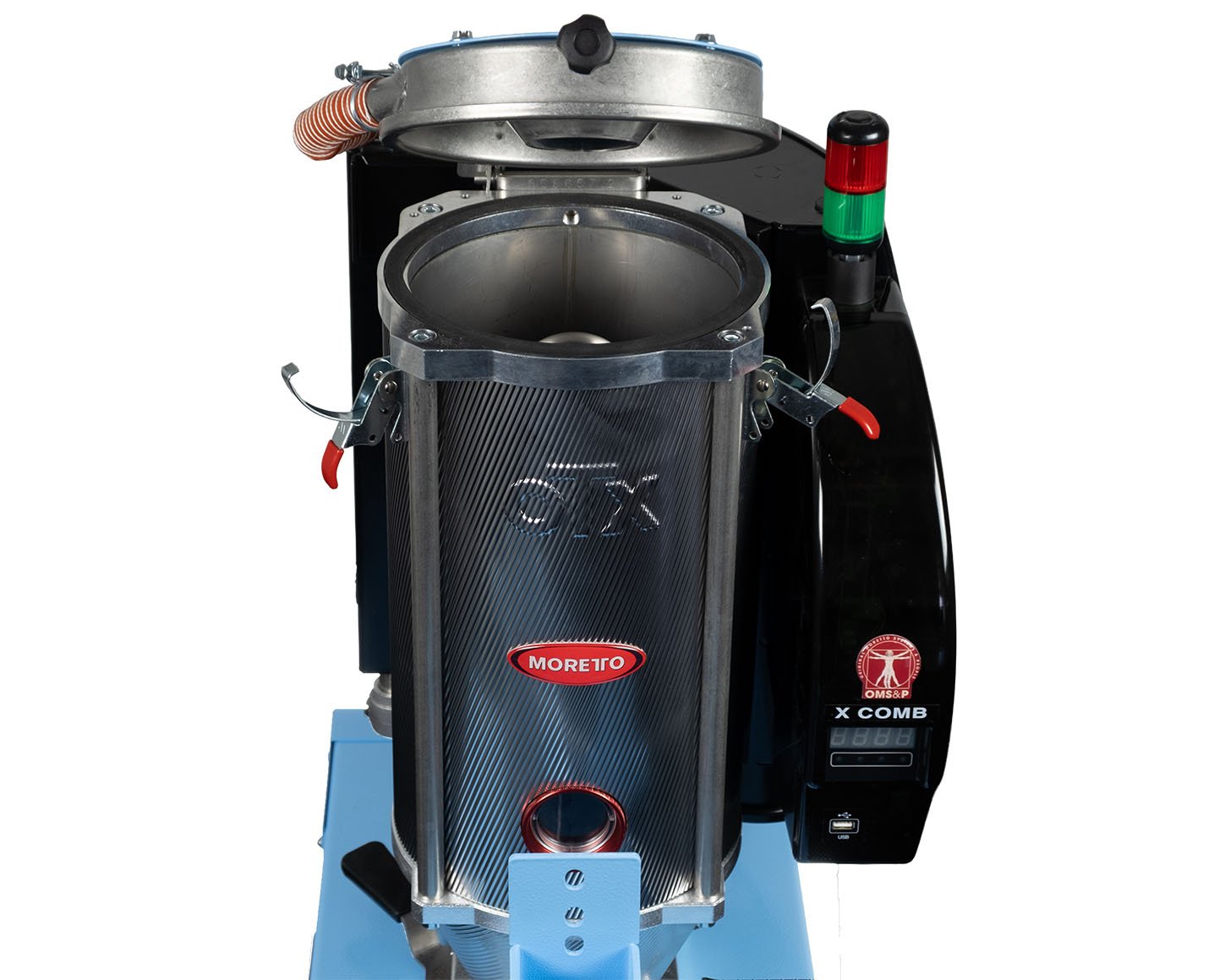
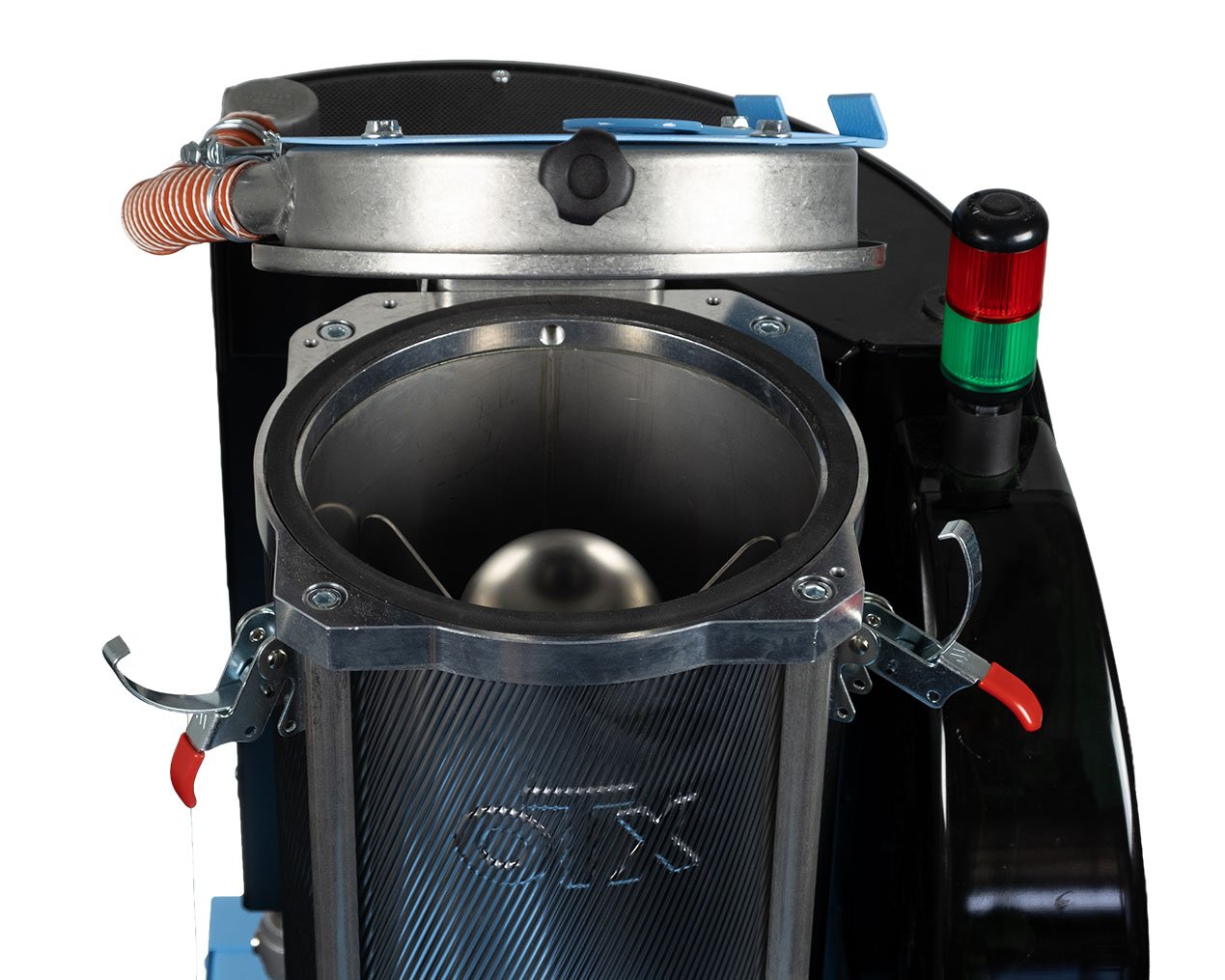
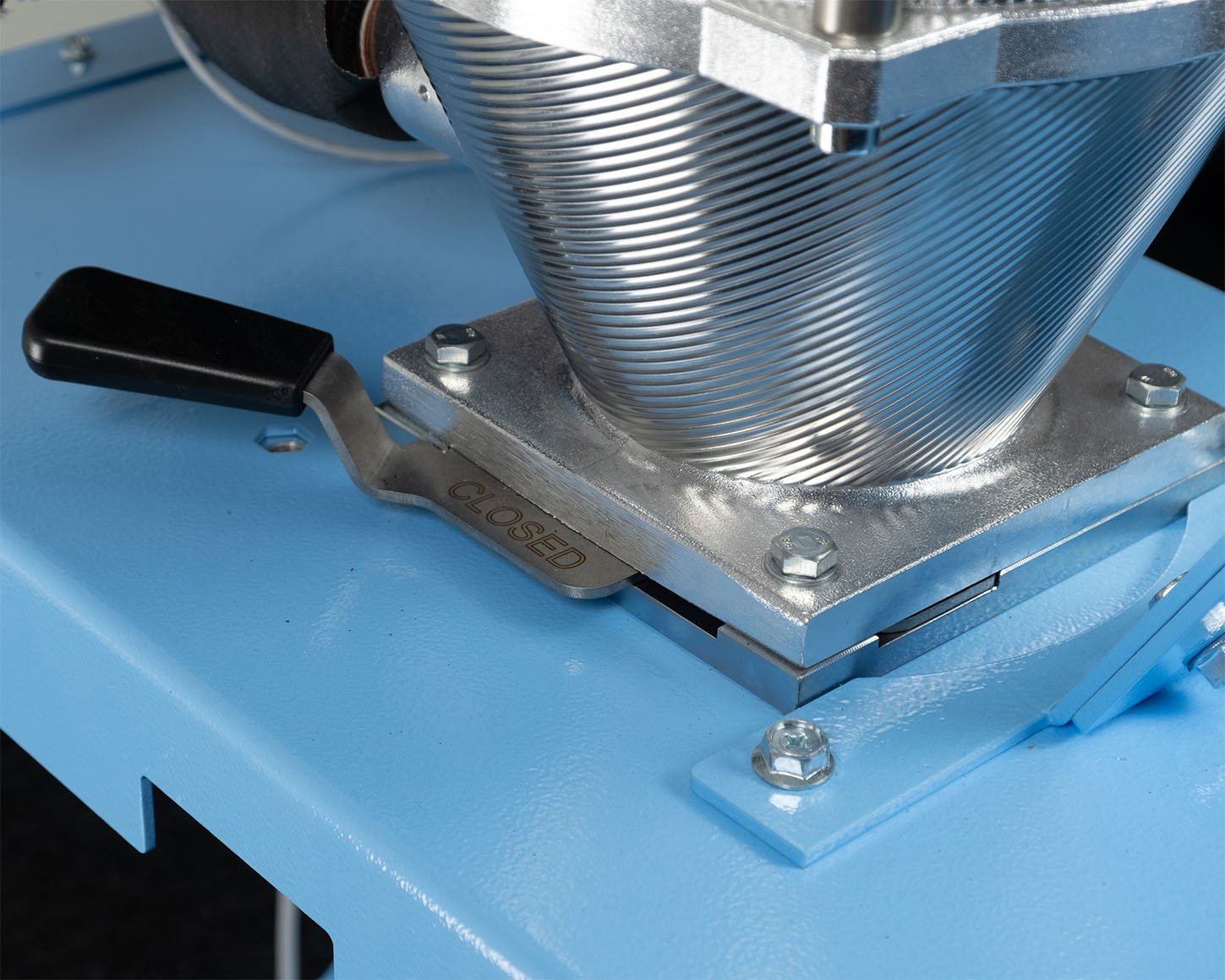
OTX hopper geometry uses a central air-distribution duct and a profiled body to move material downward as a uniform column. 

  • Shorter residence time to reach target moisture
  • Natural rockwool insulation holds resin temperature and carries moisture away
  • No stagnant zones at the wall, so no partially dried material reaching the extruder
Technical Specifications

Hopper capacity
12 L (12 dmc) / 0.42 cft
Material capacity
7.2 kg / 15.9 lb (at 0.6 kg/dm³ bulk density)
Max. drying capacity
2.4 kg/h
Drying temperature
60 to 180 °C
Dew point
down to −45 °C
Adjustable airflow
2 to 8 m³/h
Energy consumption
approx. 30 W/kg
Electrical power
1.7 kW / 2.3 HP
Power supply
230 V / 1-phase / 50–60 Hz
Control voltage
24 V DC
Unit weight
34.0 kg / 75.0 lb
Dimensions (W × D × H)
361 × 466 × 571 mm / 14.2 × 18.3 × 22.5 in
Outlet flange
Ø 70 mm / 2.8 in
Certification
CE as standard; UL-CSA execution available

Larger Capacities

Two larger hopper volumes are available on request, sharing the same 1.7 kW electrical power and Ø 70 mm outlet flange.

Model
Hopper
Material capacity
Weight
Dimensions (W × D × H)
XD12
12 L
7.2 kg / 15.9 lb
34.0 kg
361 × 466 × 571 mm
XD13
24 L
14.4 kg / 31.7 lb
38.0 kg
432 × 503 × 744 mm
XD14
36 L
21.6 kg / 47.6 lb
57.5 kg
519 × 560 × 938 mm

Not Sure Where Drying Fits Your Process?

Tell us what material you're running and where it comes from. We'll tell you whether you need this step, and what the rest of the workflow looks like.